
Hokkien Mee is one of Singapore’s most beloved hawker dishes, known for its rich prawn broth, stir-fried noodles, and fragrant smoky flavor. This guide will show you how to prepare flavorful Hokkien Mee at home — complete with step-by-step instructions, key ingredients, cooking tips, and common mistakes to avoid.
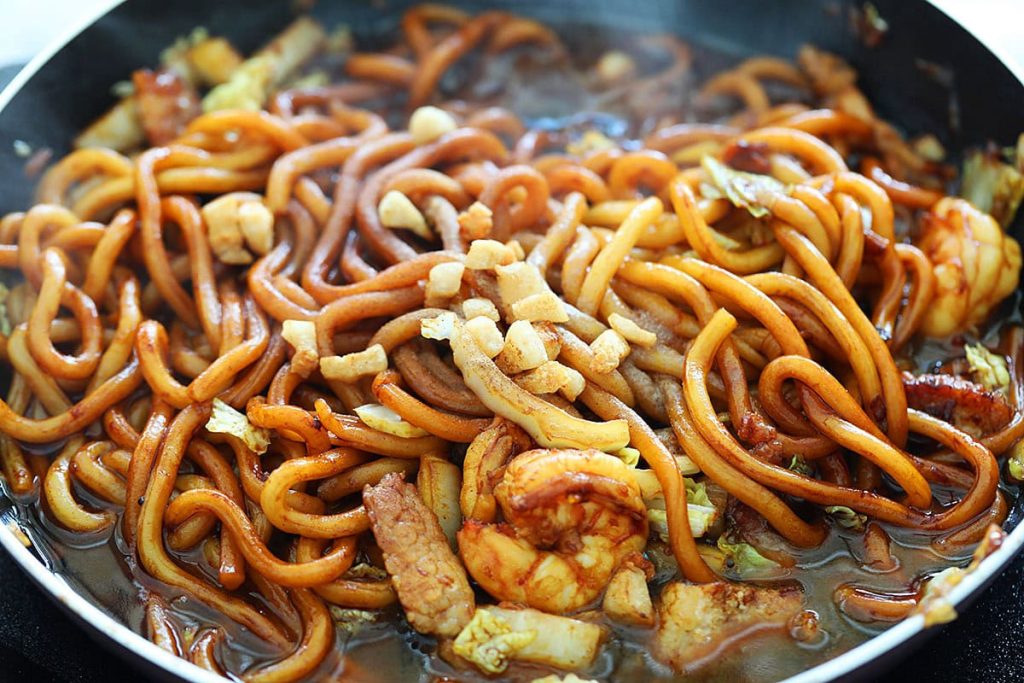
What Is Hokkien Mee?
Singapore Hokkien Mee is a stir-fried noodle dish prepared with yellow noodles and thick rice noodles, cooked in a savory seafood broth. It usually includes prawns, squid, pork belly slices, and is served with sambal and lime for extra zest.
The magic of the dish lies in the stock — deep, aromatic, and full of umami.
Ingredients You Will Need
For the Broth
- Prawn heads and shells (from 300g prawns)
- 1.2 liters water
- 2 garlic cloves
- 1 small onion
- 1 tbsp oil
For the Noodles
- 200g yellow noodles
- 200g thick rice noodles
- 300g prawns, cleaned
- 150g squid, sliced
- 100g pork belly, thinly sliced
- 2 eggs
- 1 tbsp soy sauce
- 1 tbsp oyster sauce
- 1 tsp fish sauce
- 1 tsp sugar
- 2 tbsp oil
For Serving
- Lime wedges
- Sambal chili
Step-by-Step Guide to Making Hokkien Mee
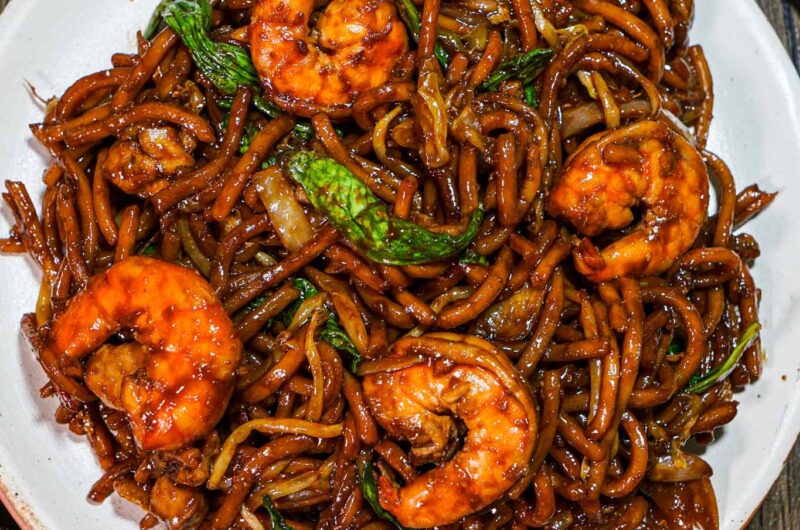
1. Prepare the Seafood Broth
- Heat oil in a pot and fry prawn heads and shells until fragrant.
- Add garlic and onion, fry lightly.
- Pour in water and simmer for 20–30 minutes.
- Strain the broth and set aside.
A rich broth is the key to authentic Hokkien Mee flavor.
2. Stir-Fry the Pork and Seafood
- Heat oil in a large wok or pan.
- Add pork belly slices and cook until lightly browned.
- Add prawns and squid and stir-fry until just cooked.
- Remove and set aside.
3. Add and Fry the Noodles
- Add a little more oil to the wok.
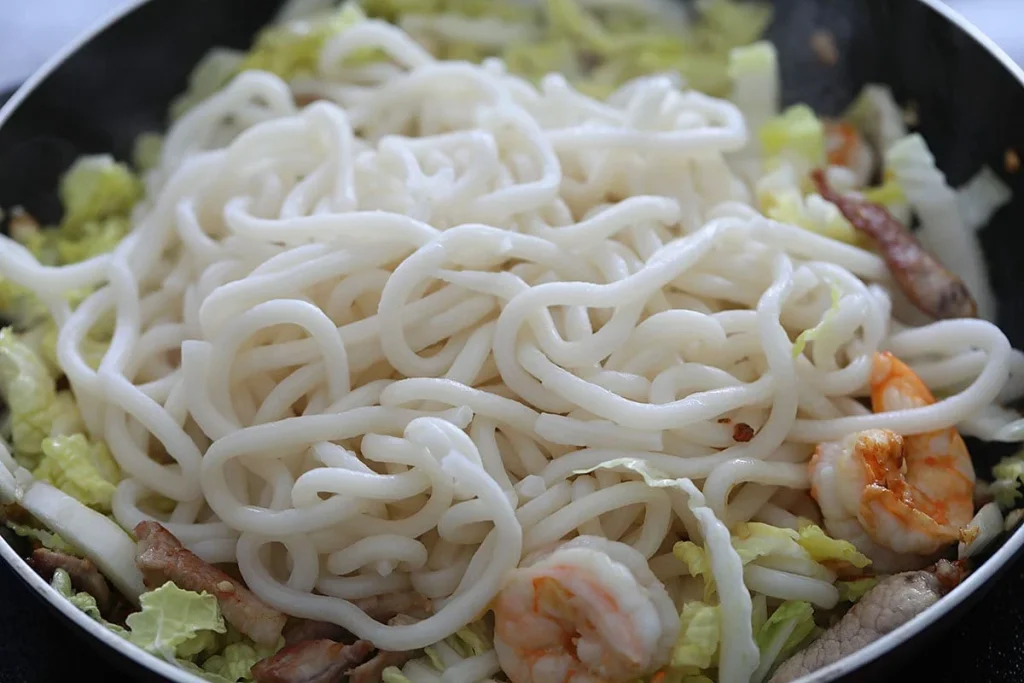
- Add yellow noodles and rice noodles.
- Stir-fry gently so they do not break.
4. Add the Broth
Pour in about 2 cups of the prawn broth and let the noodles absorb the liquid.
5. Add Sauces and Seasoning
Mix in:
- Soy sauce
- Oyster sauce
- Fish sauce
- Sugar
Taste and adjust as needed.
6. Add Eggs
Push the noodles aside, crack in 2 eggs, and scramble lightly before mixing into the noodles.
This creates a creamy, silky texture.
7. Add Back the Seafood and Pork
Combine everything and let the flavors blend for 2–3 minutes.
8. Serve
Dish out the Hokkien Mee and serve with:
- Lime wedges (for acidity)
- Sambal chili (for heat)
Tips for Perfect Hokkien Mee
- Use a wok for better heat distribution
- Do not overcook prawns and squid
- Allow noodles to absorb broth fully
- Use fresh lime for a bright finish
- Add more broth for a wetter version
Common Mistakes to Avoid
- Weak broth — flavor becomes flat
- Stir-frying on low heat — no wok aroma
- Too much sauce — noodles become too dark
- Overcooking seafood — turns rubbery
- Adding broth too late — noodles won’t absorb flavor
Variations You Can Try
- Dry Hokkien Mee — reduce broth
- Extra seafood — add mussels or clams
- Spicy version — add chili padi
- Pork-free — replace pork with chicken or remove entirely
Nutritional Breakdown (Approx. per serving)
- Calories: 480
- Protein: 35g
- Carbohydrates: 55g
- Fat: 15g
FAQ
1. Can I use only yellow noodles?
Yes, but the mix of rice and yellow noodles gives the best texture.
2. Can I make the broth in advance?
Absolutely. It keeps for 2 days in the fridge or 1 month frozen.
3. What if I don’t have a wok?
Use a wide pan and cook on high heat to mimic wok flavor.
4. Is Hokkien Mee spicy?
No, unless you add sambal on the side.
5. How do I make the dish wetter?
Add an extra half cup of broth at the final step.